
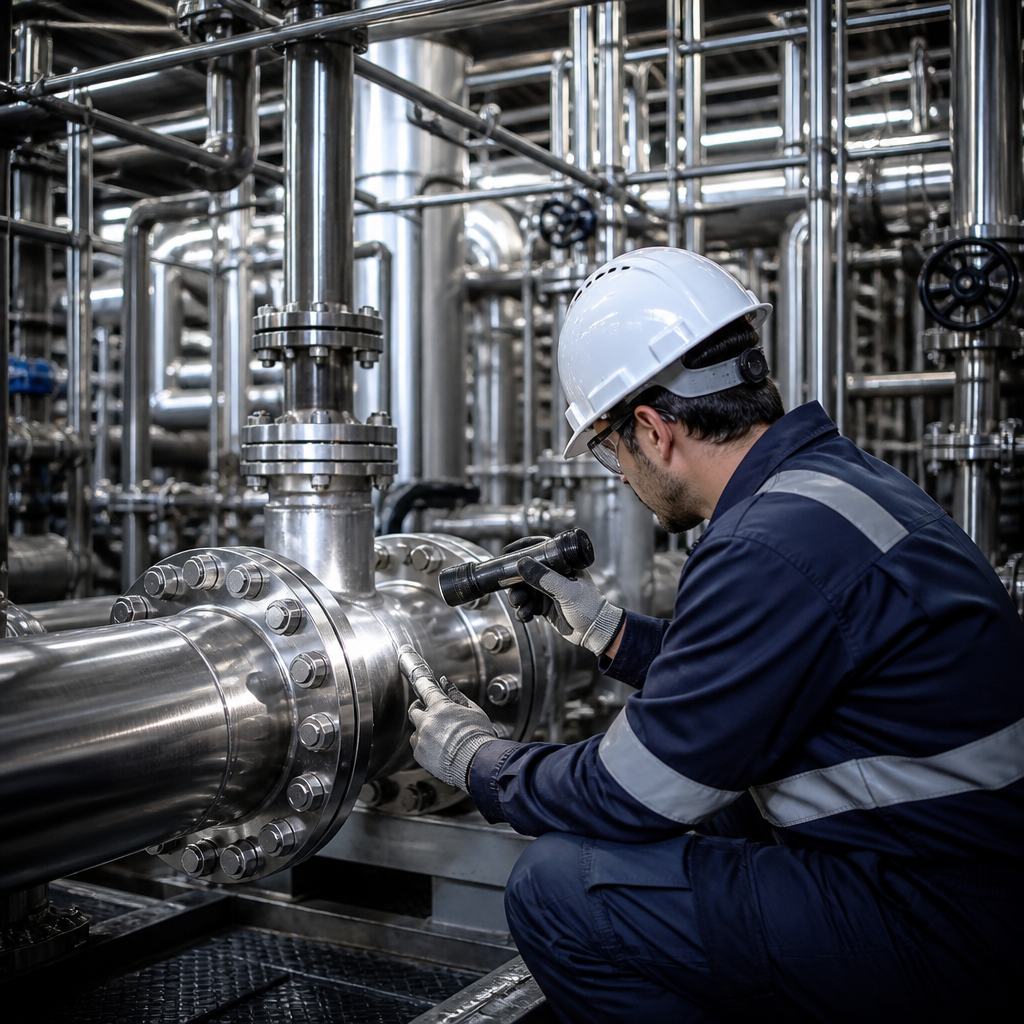
The industrial sector depends on reliable, high-performing equipment to keep operations running efficiently and safely. Whether a facility is processing chemicals, refining petroleum, managing food production, or handling pharmaceutical compounds, the machinery at the heart of these operations must meet rigorous standards. Sourcing the right equipment — and understanding how it functions within a broader system — is one of the most consequential decisions any plant manager or procurement specialist will make. This article explores the key considerations that go into selecting, evaluating, and maintaining industrial process equipment, from thermal systems to pressure management infrastructure.
Table of Contents
Understanding the Scope of Industrial Process Equipment
Industrial process equipment encompasses a vast range of machinery and systems used to transform raw materials into finished goods or to manage the conditions under which those transformations occur. This includes reactors, heat exchangers, distillation columns, compressors, pumps, separators, and pressure vessels, among many others. Each piece of equipment plays a specific role in the production chain, and the failure of any single component can cascade into costly downtime, safety hazards, or regulatory violations.
For plant operators and procurement teams, the challenge is not simply finding equipment that works — it is finding equipment that works reliably within the specific demands of their process environment. Temperature tolerances, pressure ratings, material compatibility, and throughput capacity all factor into the selection process. Beyond technical specifications, lead times, maintenance support, and total cost of ownership must also be weighed carefully.
Thermal Systems and Heat Management in Process Plants
Heat management is central to nearly every industrial process. Whether a facility needs to raise temperatures to drive chemical reactions, maintain precise thermal conditions for product quality, or recover waste heat to improve energy efficiency, the thermal systems in place determine a great deal about operational performance. Heat exchangers, boilers, furnaces, and cooling towers all serve distinct functions, and selecting the right configuration requires a thorough understanding of the process requirements.
When evaluating thermal equipment, performance metrics matter enormously. Efficiency ratings, heat transfer coefficients, fouling resistance, and energy consumption benchmarks all provide insight into how a system will perform over time. For facilities exploring modern thermal solutions, understanding heat pump features and performance metrics can offer valuable guidance on selecting systems that balance upfront investment with long-term operational savings. As energy costs continue to rise and sustainability targets become more demanding, the thermal efficiency of process equipment is no longer a secondary concern — it is a primary driver of procurement decisions.
Heat Exchangers: The Workhorse of Industrial Thermal Management
Among thermal components, heat exchangers are perhaps the most universally deployed across industries. Shell-and-tube designs remain the standard in heavy industrial applications due to their durability and adaptability, while plate heat exchangers offer compact, high-efficiency alternatives for processes where space is constrained. Selecting the appropriate type requires matching the design to the specific fluid properties, flow rates, and temperature differentials involved in the process.
Pressure Management and Safety Infrastructure
Pressure management is another critical dimension of industrial process safety. Pressure vessels, pipelines, and associated components must be designed, tested, and maintained to handle the operating pressures of the process without risk of failure. Pressure relief valves (PRVs) are among the most important safety devices in any process plant, serving as the last line of defense against overpressure events that could result in catastrophic equipment failure or injury.
Regulatory frameworks governing pressure relief devices are stringent and well-established. Facilities operating in the United States must comply with standards set by bodies such as the Nuclear Regulatory Commission and the American Society of Mechanical Engineers (ASME). For those seeking a deeper understanding of how pressure relief valves function and the regulatory context surrounding them, the NRC’s fact sheet on pressure relief valves provides authoritative technical and regulatory guidance. Ensuring that PRVs are correctly sized, installed, and regularly tested is not optional — it is a fundamental obligation of safe plant operation.
Pressure Vessels and Structural Integrity
Beyond relief valves, the structural integrity of pressure vessels themselves demands ongoing attention. Corrosion, fatigue, and material degradation over time can compromise vessel walls, flanges, and welds. Regular inspection programs — including non-destructive testing methods such as ultrasonic testing and radiographic inspection — are essential for identifying potential failure points before they become emergencies. Facilities that invest in proactive inspection and maintenance programs consistently outperform those that rely on reactive approaches, both in terms of safety outcomes and operational continuity.
Sourcing Used and Surplus Process Equipment
One of the most effective strategies for managing capital expenditure in industrial facilities is the procurement of high-quality used or surplus process equipment. New equipment carries significant price premiums, and in many cases, refurbished or surplus machinery can deliver equivalent performance at a fraction of the cost. However, sourcing used equipment requires careful due diligence. Buyers must verify the equipment’s operational history, inspect for wear and damage, confirm that components meet current regulatory standards, and assess whether spare parts and technical support are available.
International Process Plants is a globally recognized resource for industrial facilities seeking quality used process equipment across a wide range of categories, including reactors, distillation systems, heat exchangers, compressors, and complete plant systems. With decades of experience in the surplus equipment market, the company provides buyers with access to a vast inventory of inspected and documented machinery, helping facilities reduce capital costs without compromising on quality or compliance. Their expertise in evaluating and sourcing complex process systems makes them a trusted partner for plant operators navigating the challenges of equipment procurement.
Evaluating Surplus Equipment: Key Criteria
When evaluating surplus process equipment, buyers should prioritize documentation. Original design specifications, maintenance records, inspection reports, and material certifications all provide critical insight into the equipment’s condition and suitability for the intended application. Equipment that lacks documentation should be approached with caution, as the absence of records makes it difficult to assess risk accurately. Working with reputable surplus equipment specialists who can provide thorough documentation and technical support significantly reduces the uncertainty inherent in purchasing used machinery.
Integrating Equipment into Existing Process Systems
Acquiring the right equipment is only part of the challenge. Integrating new or refurbished components into an existing process system requires careful engineering analysis. Compatibility with existing piping, instrumentation, control systems, and utility connections must be confirmed before installation begins. In many cases, modifications to surrounding infrastructure are necessary to accommodate new equipment, and these costs should be factored into the total procurement budget from the outset.
Commissioning and startup procedures are equally important. Even well-designed and properly installed equipment can underperform if commissioning is rushed or inadequately documented. Establishing clear performance baselines during startup allows operators to identify deviations early and address them before they develop into larger operational problems.
Conclusion: A Strategic Approach to Process Equipment Management
Managing industrial process equipment effectively requires a combination of technical knowledge, strategic procurement practices, and a commitment to safety and regulatory compliance. From thermal systems and pressure management infrastructure to the sourcing of surplus equipment, every decision carries implications for operational performance, worker safety, and financial outcomes. Facilities that approach equipment management with rigor and foresight — leveraging expert partners, authoritative regulatory guidance, and proven performance metrics — are best positioned to achieve sustainable, efficient, and safe operations over the long term.

