
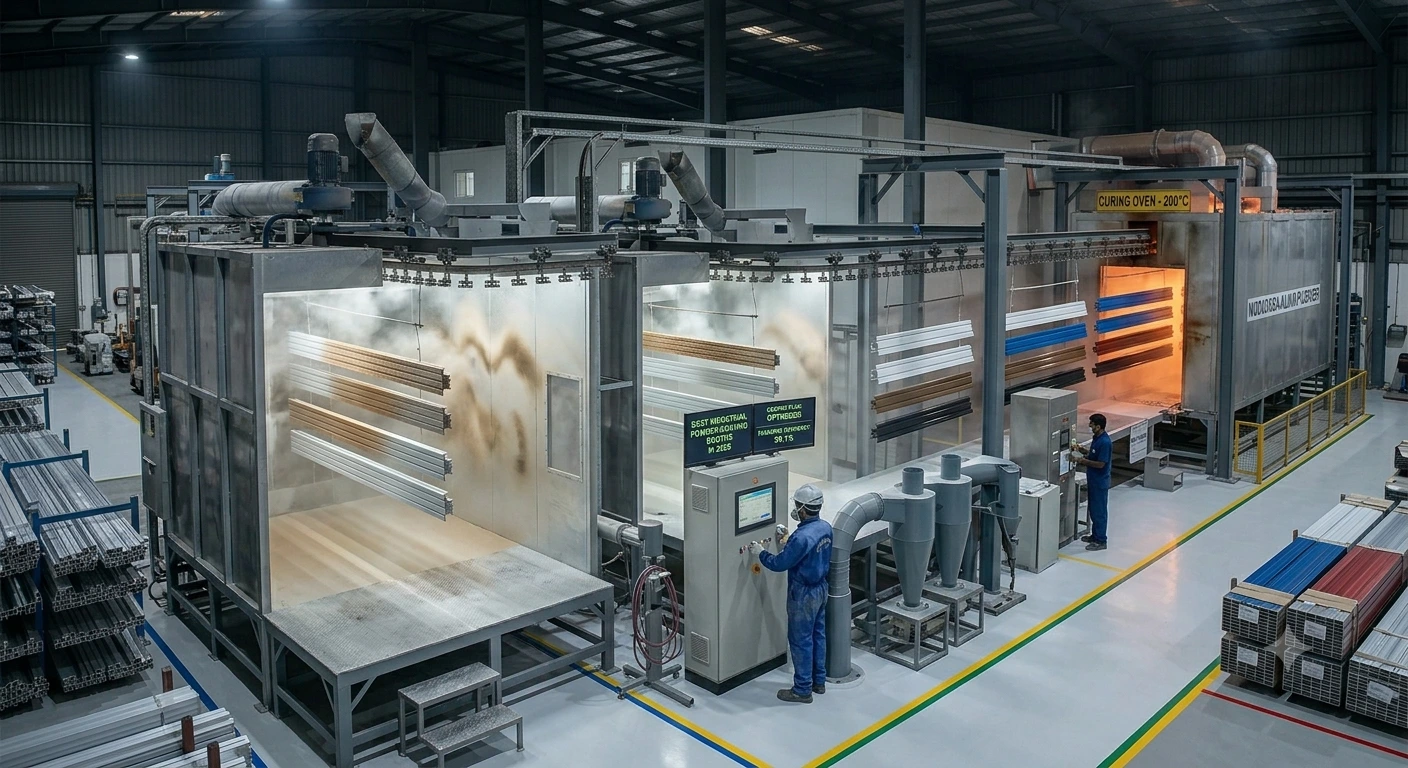
Production demands can outgrow a basic finishing setup faster than many shops expect. Once parts become heavier, batches become denser, or customers require tighter finish consistency, the oven becomes one of the most important pieces of powder coating equipment in the line. Reliant powder curing ovens are often a strong fit for operations that need dependable heat control, larger capacity, and repeatable results under demanding workloads.
Table of Contents
High-capacity Job Shops Running Multi-shift Operations with Dense Parts Trees
Busy job shops often coat a wide range of parts for different customers in the same day. Dense parts trees allow more pieces to be cured in each batch, but they also make airflow and heat transfer harder to manage. A smaller oven may leave parts unevenly cured when racks are packed tightly.
Consistent heating helps multi-shift operations keep production moving without constant rework. Reliant powder coating equipment can support shops that need dependable oven performance across long workdays, varied part sizes, and changing job requirements.
Structural Steel Fabricators Curing Massive I-beams and Architectural Columns
Steel fabricators often deal with parts that are too large or too heavy for light-duty finishing systems. I-beams, columns, railings, frames, and welded assemblies need enough oven clearance, strong cart support, and reliable heat recovery. Large steel sections absorb heat slowly, so curing depends on metal temperature, not just air temperature.
Oversized parts also need room for proper airflow around each surface. If heat cannot move evenly through the oven chamber, coating performance may vary from one side of the part to another. Industrial curing capacity gives fabricators a better way to finish large work without squeezing parts into undersized equipment.
Tier-one Automotive Suppliers Needing Flawless Finishes on Heavy Suspension Parts
Automotive suppliers often work under strict quality expectations. Suspension parts, brackets, chassis components, and heavy assemblies may require durable coatings that can resist wear, corrosion, and road exposure. A reliable curing oven helps ensure powder reaches the correct cure window for the required finish strength.
Repeatability matters because automotive production depends on consistency across large volumes. One poor batch can affect deadlines, inspections, and customer confidence. Shops reviewing Reliant powder coating equipment for sale often look for systems that can support steady production and fewer finish defects.
Defense Contractors Meeting Strict Military-spec Curing Uniformity Standards
Defense-related parts may require coatings that meet exact performance standards. These projects can involve corrosion resistance, durability, traceability, documentation, and consistent curing across every coated surface. Powder curing becomes part of quality control, not just a finishing step.
Careful oven selection helps contractors meet demanding specifications. Reliable temperature control, proper airflow, and documented cure cycles can support more consistent results. A Reliant powder coating equipment package may help defense suppliers build a finishing line around stronger process control from prep through cure.
Industrial Equipment OEMs Sealing Large Agricultural or Construction Frames
Original equipment manufacturers often coat frames, guards, brackets, panels, and machinery components that see harsh environments. Agricultural and construction equipment may face mud, moisture, sunlight, vibration, chemicals, and heavy use. A durable powder finish helps protect these parts before they reach the field.
Heavy frames require curing ovens with enough power and space to handle both size and thermal mass. If the oven cannot recover heat after loading, cycle times stretch and finish quality can suffer. Industrial OEMs benefit from curing systems designed around real production parts instead of average sample pieces.
Commercial Furniture Brands Requiring Fast, Repeatable Batch Runs Every Day
Commercial furniture manufacturers often coat chair frames, table bases, shelving, partitions, and metal fixtures in steady batches. These parts may not always be massive, but they need uniform appearance across repeated production runs. Color, gloss, texture, and edge coverage all affect the final product customers see.
Fast throughput helps furniture brands meet dealer, hospitality, school, and office project timelines. Reliable powder coating equipment can reduce delays between batches while helping each run maintain the same finish standard. Good oven performance supports both speed and visual consistency.
Fleet Maintenance Facilities Refinishing Heavy Utility Trailers and Truck Beds
Fleet maintenance shops often repair and refinish equipment that takes daily abuse. Utility trailers, truck beds, racks, bumpers, toolboxes, and service bodies need coatings that can handle outdoor exposure and physical wear. Industrial curing ovens allow these facilities to restore larger assets with a more durable finish than basic paint may provide.
Practical workflow also matters in fleet environments. Large parts must move safely from prep to coating to cure without slowing other repair work. Reliant powder curing ovens can help facilities build a finishing process suited for heavier commercial equipment and frequent maintenance cycles.
Aerospace Component Makers Working with High-tolerance, Heat-sensitive Alloys
Aerospace work often involves tight tolerances, careful documentation, and materials that must be handled correctly. Certain components may need controlled curing conditions to protect coating performance without exposing parts to unnecessary heat stress. Oven accuracy becomes a major part of process discipline.
Reliant Finishing Systems serves manufacturers and finishing operations that need powder coating equipment matched to part size, workload, production goals, and finish requirements. Companies comparing Reliant powder coating equipment, Reliant powder curing ovens, or a complete Reliant powder coating equipment package can use their equipment options to build a curing process that fits heavier parts, stricter quality demands, and higher-volume production.

